Sep 17, 2026Buying Guides
Are LED Face Masks Safe for Sensitive Skin? What to Know
Are LED face masks safe for sensitive skin? Learn what matters most, from wavelength and treatment time to heat, fit, comfort, and LED mask design.
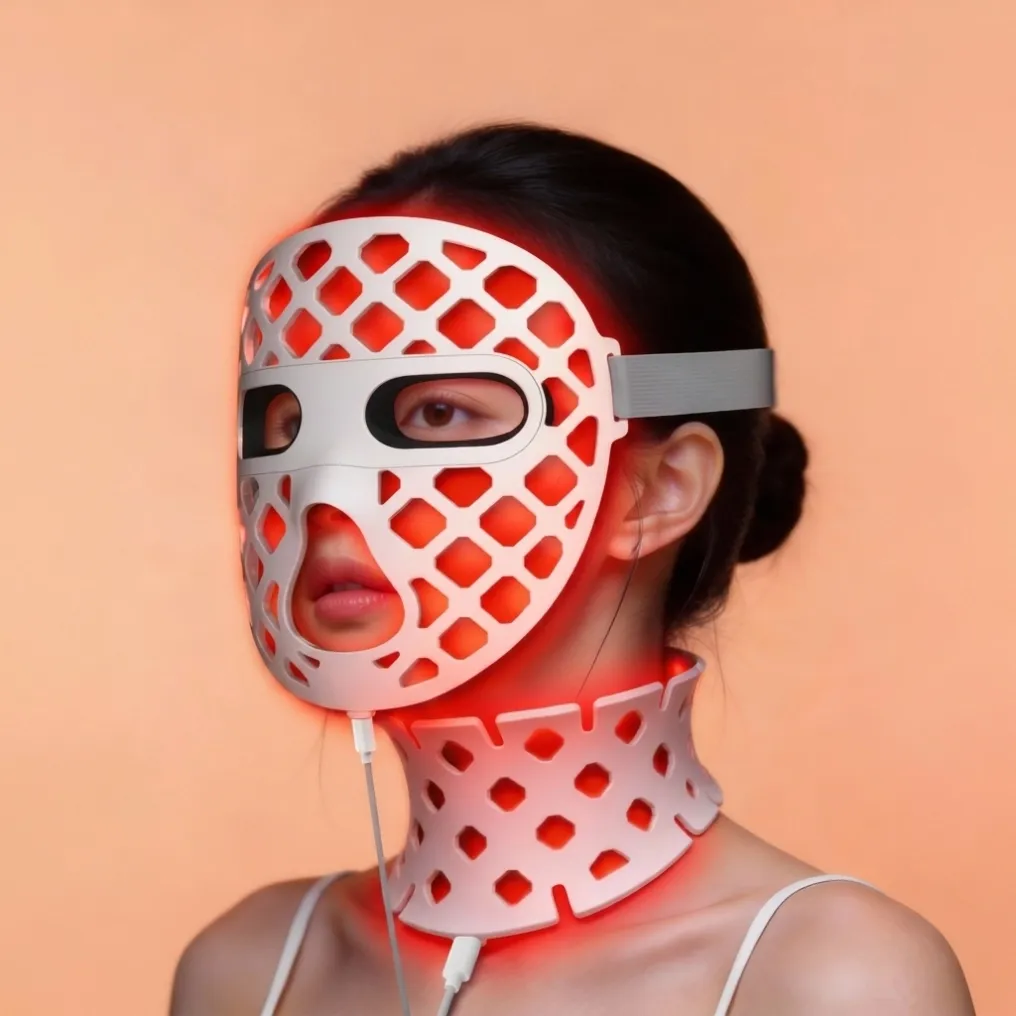
Are LED Face Masks Safe for Sensitive Skin?
If you have sensitive skin, trying a new skincare device can feel a little different from trying a new moisturizer.
With an LED face mask, there are understandable questions:
Will the light make my skin red? Will the mask get hot? What if my skin already reacts easily?
The short answer is that LED light therapy is generally non-invasive, and red and near-infrared light do not work like UV light. But “sensitive skin” covers a wide range of situations, so there isn't one answer that fits everyone.
More importantly, the experience doesn't depend on wavelength alone.
Treatment time, intensity, heat, mask fit and even the distance between the LEDs and the skin can all affect how comfortable an LED mask feels.
Let's break that down.
First: LED Light Is Not UV Light
This is probably the most common misunderstanding worth clearing up.
LED face masks typically use specific wavelengths of visible light and, in some products, near-infrared light. They are different from ultraviolet radiation.
For example, red-light beauty devices commonly use wavelengths around 630–660 nm, while near-infrared systems often operate around 830–850 nm.
That doesn't mean every LED mask is automatically suitable for every person with sensitive skin. It simply means you shouldn't think of a red LED face mask as a miniature tanning device.
For sensitive-skin users, the better question is:
How is the light being delivered?
That's where product design starts to matter.
1. More Power Isn't Always Better
It's easy to compare LED masks by looking at one number: irradiance.
Higher must be better, right?
Not necessarily.
The actual light dose depends on more than irradiance. Treatment time and distance from the light source matter too.
A simplified way to think about it is:
Light Dose = Irradiance × Treatment Time
So pushing an LED mask to a higher output isn't automatically an improvement—particularly when you're designing a device that people are expected to wear regularly at home.
For someone with sensitive skin, a comfortable, controlled treatment can make more sense than simply chasing the highest possible power specification.
This is something we discuss quite often with OEM customers. A specification that looks impressive on a comparison chart still has to make sense when somebody actually puts the product on their face.
2. Pay Attention to Heat, Not Just Light
One thing people sometimes overlook when choosing an LED face mask is temperature.
LEDs themselves aren't the whole story. The electronics, controller, battery configuration and power level can all influence how warm a device becomes during operation.
A little warmth doesn't automatically indicate a problem, but excessive or uneven heat can make a mask unpleasant to wear—especially for someone whose skin is already reactive.
This is why increasing irradiance isn't simply a matter of “turning up the power.”
During LED mask development, output and thermal performance should be considered together.
For a brand developing an LED face mask for sensitive skin, we'd put thermal behavior fairly high on the evaluation list.
3. Mask-to-Skin Distance Matters More Than It Looks
Here's another detail that rarely gets much attention on a product listing:
How far are the LEDs from the face?
Two masks can use similar LED chips and still feel quite different because of their structure.
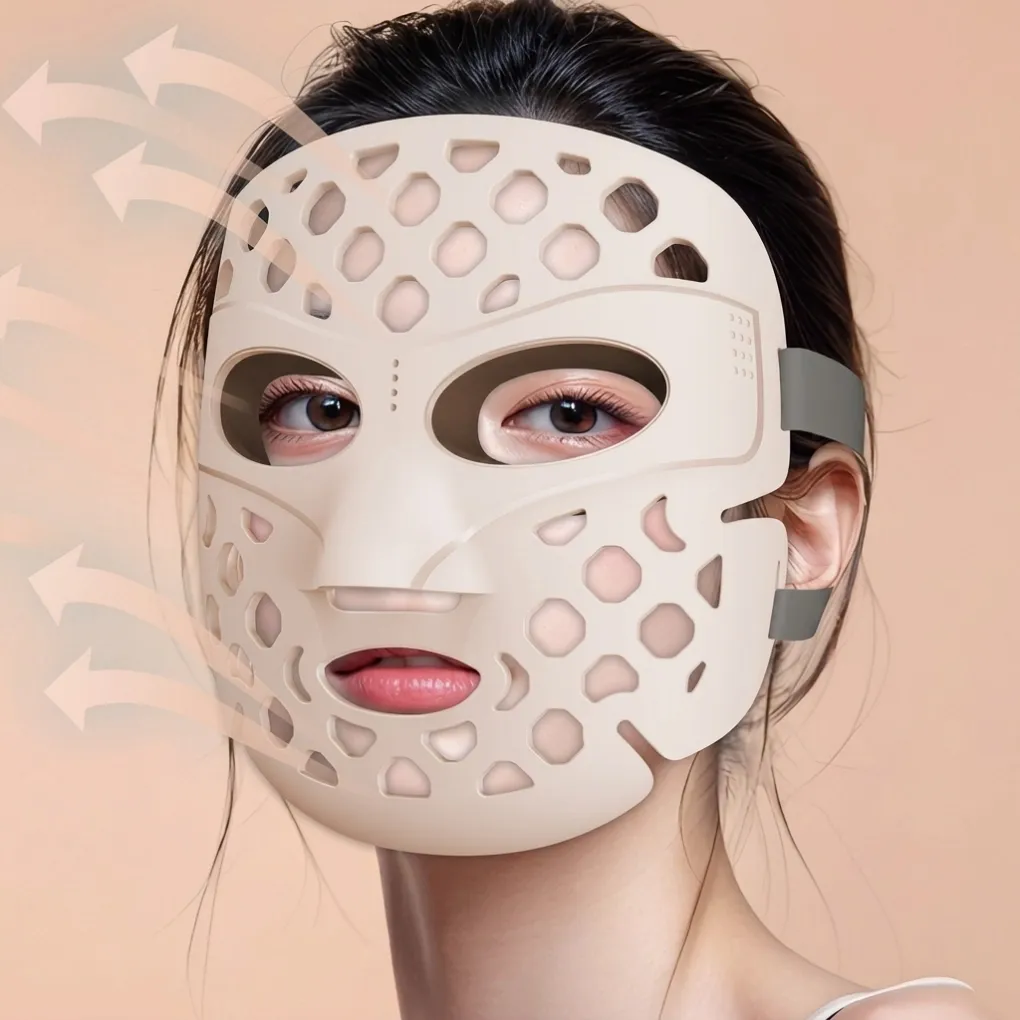
A well-designed 3D mask creates a controlled space between the light source and the skin rather than pressing every component directly against the face.
That can help with:
- airflow,
- wearing comfort,
- more predictable light delivery,
- and reducing unnecessary pressure on sensitive areas.
This is one reason we pay attention to the 3D structure and LED-to-skin distance when developing home-use LED masks.
It's a small engineering detail, but users notice the result.
4. Comfort Is Part of the Sensitive-Skin Conversation
People often talk about LED wavelengths and forget that an LED mask is also something you physically wear on your face.
Weight matters.
Pressure around the nose matters.
Eye-area design matters.
The silicone touching the skin matters.
Ventilation matters.
If a mask feels heavy, smells strongly of material, presses against the face or becomes uncomfortable after several minutes, users may simply stop wearing it.
And that's an important point for beauty brands:
A feature only has value if customers are comfortable enough to keep using the product as intended.
For this reason, we prefer skin-contact materials such as soft, suitable-grade silicone and pay attention to mask weight, facial geometry and support structure—not just the LED specification sheet.
5. What About Red, Blue and Near-Infrared Light?
Not every wavelength needs to be treated as interchangeable.
Red Light
Red light is commonly used in home beauty devices and is often the first mode brands consider when developing a general skincare LED mask.
Typical wavelengths include 630 nm and 660 nm, depending on the LED configuration.
Near-Infrared Light
Near-infrared light, such as 830 nm or 850 nm, is invisible to the human eye and is frequently paired with red light in LED beauty devices.
Blue Light
Blue light is commonly associated with acne-focused LED devices.
But if the product is specifically positioned toward sensitive-skin users rather than acne treatment, adding more colors simply to make the feature list longer isn't necessarily the best product-development decision.
This is something worth discussing during OEM development:
What does your target customer actually need?
A thoughtful wavelength configuration is usually more useful than adding modes just so the packaging can say “7 colors.”
6. Start Conservatively If Your Skin Reacts Easily
Even when using a home-use LED mask as directed, someone with sensitive skin may prefer to start cautiously rather than immediately using the longest session or highest available setting.
Follow the manufacturer's instructions for the specific device. If the device offers adjustable intensity or treatment duration, the lower end can be a reasonable starting point.
It also makes sense to stop using the device if you experience persistent irritation, discomfort or an unexpected skin reaction.
And if you have an active skin condition, take photosensitizing medication, or aren't sure whether light therapy is appropriate for you, speak with a qualified healthcare professional before use.
That's more useful advice than claiming that one mask is “safe for everyone.”
What Should Brands Look for When Developing an LED Mask for Sensitive Skin?
This question looks slightly different from the manufacturer's side.
If you're sourcing an OEM or private-label LED face mask, don't evaluate the product only by asking:
How many LEDs does it have?
or:
What's the maximum irradiance?
Ask about the complete wearing experience.
A useful development checklist includes:
- wavelength configuration,
- irradiance and treatment duration,
- thermal performance,
- LED-to-skin distance,
- mask weight,
- skin-contact material,
- facial fit,
- ventilation,
- eye-area design,
- adjustable intensity,
- automatic treatment timer,
- and relevant product testing and compliance documentation.
These details don't look as exciting as adding another light color to a marketing graphic.
But they often make a much bigger difference to the finished product.
So, Are LED Face Masks Safe for Sensitive Skin?
For many people, LED light therapy can be a gentle, non-invasive addition to a skincare routine when an appropriate device is used according to its instructions.
But we'd avoid reducing the question to a simple yes or no.
If you have sensitive skin, look beyond the number of LEDs or colors on the box. Consider wavelength, output, treatment time, heat, fit and comfort together.
And if you're a beauty brand developing an LED face mask, the same principle applies:
Don't design for the specification sheet alone. Design for the person who has to wear it.
That difference may not be obvious in a product comparison table.
It becomes very obvious after ten minutes on someone's face.
Developing an LED Face Mask for Your Brand?
At Beautants, we support OEM/ODM development of home-use LED light therapy devices for beauty brands, distributors and private-label projects.
Depending on the project, customization can include wavelength configuration, product color, branding, packaging, controller functions and other product specifications.
If your target market includes users who care about comfort or sensitive-skin-friendly product design, tell us that at the beginning of the project.
It gives us a much better starting point than simply asking:
“Can you add more LEDs?”
FAQ
Is red light therapy safe for sensitive skin?
Red light therapy is non-UV and non-invasive, but individual skin responses vary. Device output, treatment duration, heat and skin condition should all be considered. Follow the instructions supplied with the specific device, and seek professional medical advice if you have a relevant skin condition or use photosensitizing medication.
Can an LED face mask irritate sensitive skin?
Some users may experience temporary redness, warmth or discomfort. Excessive intensity, long treatment sessions, heat, poor fit or individual sensitivity may affect the experience. Stop using the device if irritation persists.
Which LED light color is better for sensitive skin?
There isn't one wavelength that is universally “best” for all sensitive skin. Red light is commonly used in general skincare LED devices, while blue light is more often associated with acne-focused applications. Product choice should depend on the intended use and the user's individual skin condition.
How long should sensitive skin use an LED face mask?
Follow the treatment time specified by the manufacturer rather than assuming that longer exposure produces better results. If a device offers adjustable treatment time or intensity, sensitive users may prefer to begin conservatively.
Does an LED face mask get hot?
Some warmth may occur depending on LED output, electronics, battery design and treatment duration. Thermal performance is therefore an important consideration when evaluating or developing a home-use LED face mask.
What should brands consider when sourcing an LED face mask for sensitive skin?
Look beyond LED count. Wavelength, irradiance, treatment duration, thermal performance, LED-to-skin distance, skin-contact materials, mask weight, fit, eye-area design and testing documentation are all worth evaluating with the manufacturer.